Rosemary
Salvia rosmarinus
A field guide to rosemary in beds and containers: full sun, a freely drained root zone, measured watering and a winter plan matched to cultivar hardiness.
Published Last updated
At a glance
- Light
- Full sun
- Water
- Low after establishment; condition-based in containers
- Soil
- Light, lean and freely drained
- Hardiness
- Zones 8–10
- Bloom
- Primarily spring outdoors; timing varies by climate and cultivar
- Height
- 2–6 ft · 60–180 cm
In this guide
Overview
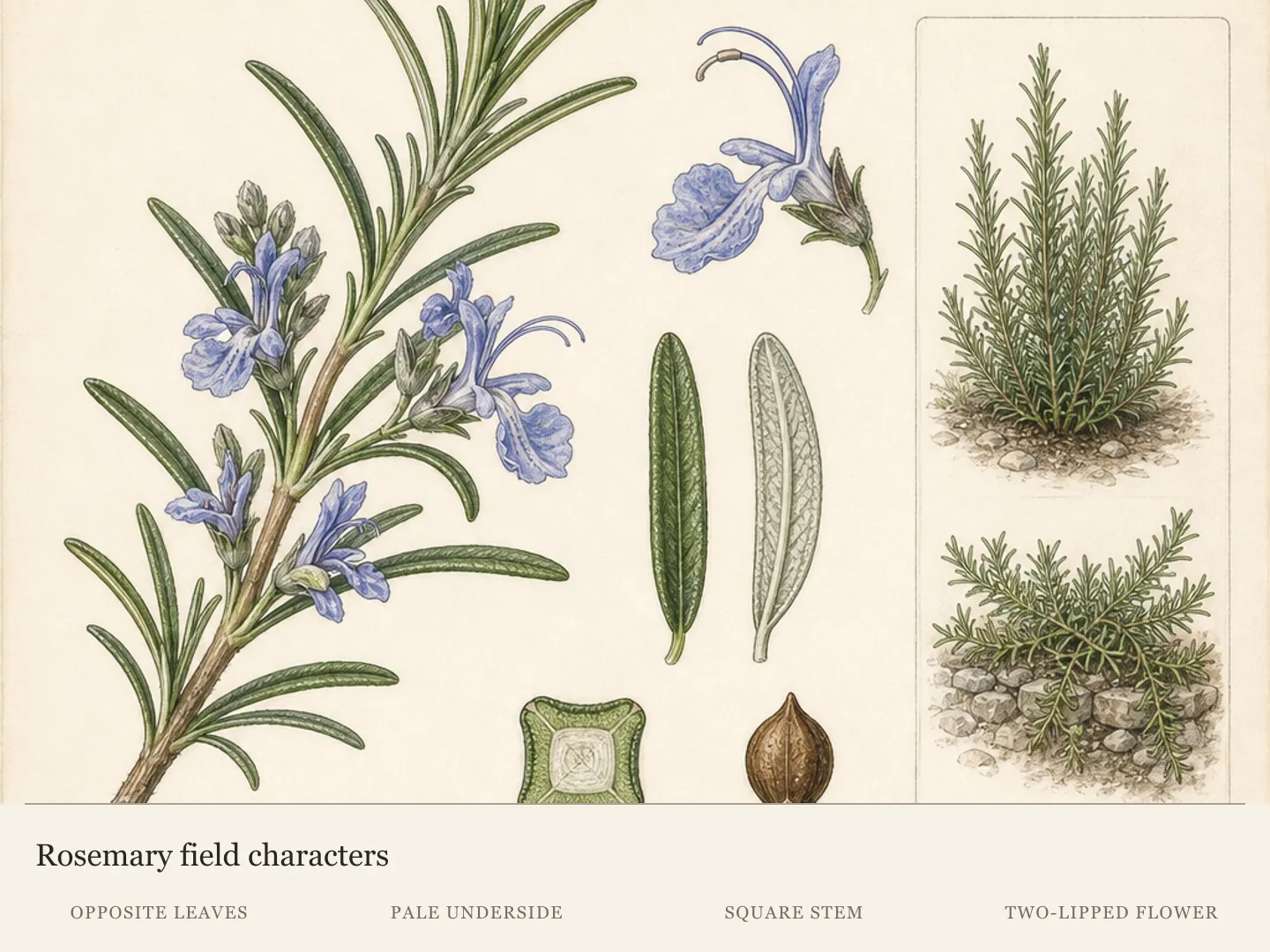
Rosemary is a woody evergreen member of the mint family with square young stems and narrow opposite leaves. The upper leaf surface is green, while the rolled margins expose a pale, finely textured underside. Small two-lipped flowers appear along older shoots and may be blue, lavender, pink or white depending on the cultivar.
The species grows naturally in dry, rocky Mediterranean settings and performs best with strong light, moving air and rapid drainage. Established garden plants tolerate dry periods, but drought tolerance does not mean a newly planted root ball or a confined container can be ignored.
Container symptoms are easy to misread without checking roots. Dry-looking tips can occur above wet mix, and water may pass around a shrunken root ball without moistening it. Probe below the surface and learn the difference between the pot's freshly drained and ready-to-water weight.
Cultivar habit matters. Upright selections can become substantial shrubs or informal hedges in mild climates; prostrate forms spill over walls and containers. Hardiness, mature size and flowering time vary enough that a named selection should be recorded rather than treated as interchangeable generic rosemary.
Harvest leafy tips regularly without stripping the old framework. Stem cuttings preserve a cultivar more reliably than seed, and rooted cuttings provide a practical backup before a marginal plant enters winter.
- Family
- Lamiaceae
- Range
- Mediterranean region
- Soil pH
- 6–7.5
- Spread
- 2–4 ft · 60–120 cm
Planting & careHow to grow rosemary
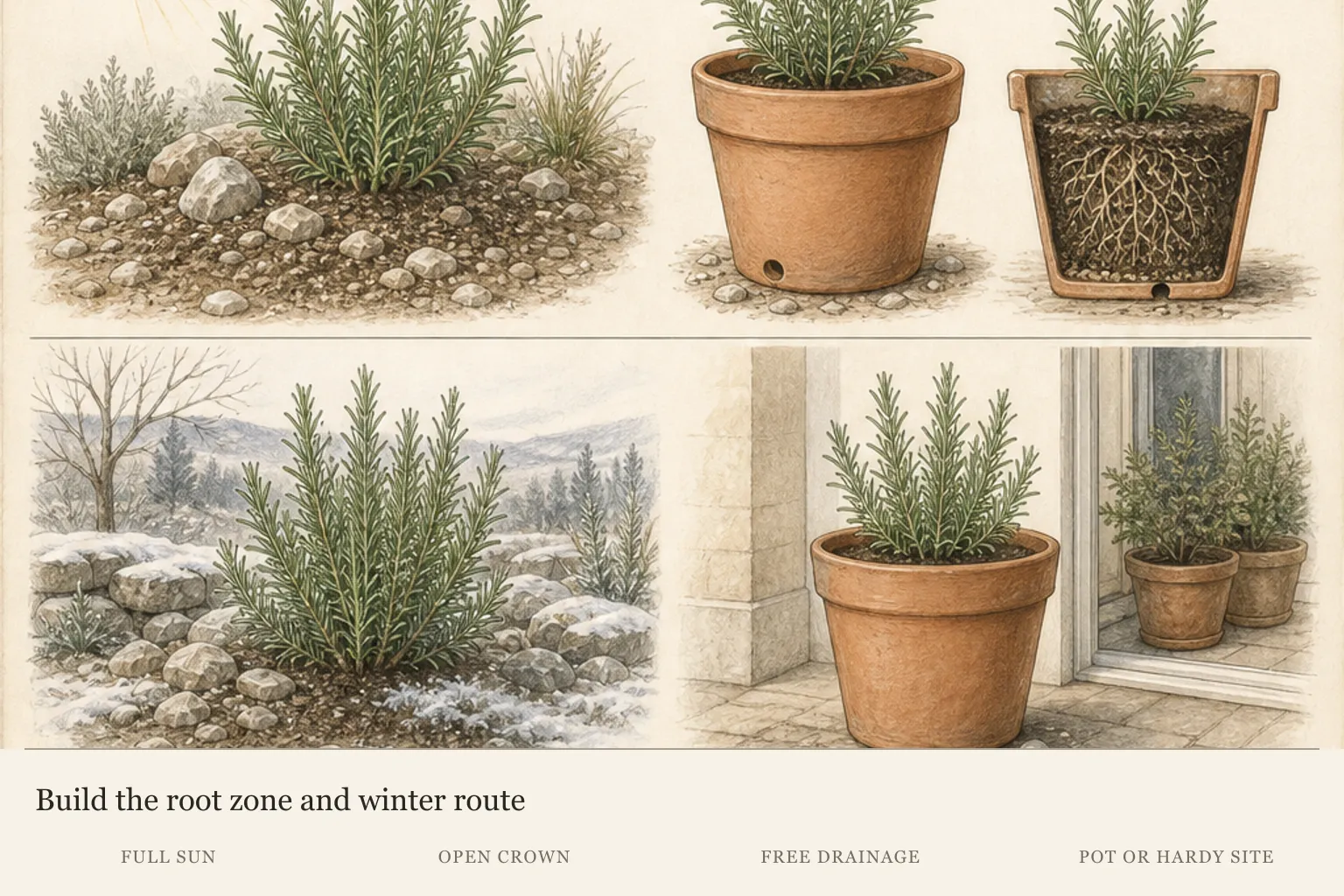
This profile uses USDA zones 8–10 as the dependable in-ground baseline. Cultivars advertised for zone 6b or 7 still need verified local performance, excellent winter drainage and protection; in colder regions, grow rosemary as a seasonal plant or overwinter a container in bright, cool conditions.
- 1Choose the winter strategy first
Confirm cultivar hardiness and decide whether the plant will remain in the ground, move under cover in a container or be treated as seasonal before planting.
- 2Find the brightest drained site
Provide at least six hours of direct sun, open air and a position where rain or irrigation leaves the root zone instead of collecting at the crown.
- 3Match the container to the root ball
For pot culture, use a stable vessel only modestly wider than the roots, with open drainage holes and enough headspace for controlled watering.
- 4Preserve the original soil line
Set the root ball at its previous depth, keep the woody crown uncovered and avoid burying lower stems in potting mix or mulch.
- 5Water once and verify drainage
Re-wet the root area thoroughly after planting, confirm that excess water exits freely and remove ordinary saucer runoff rather than leaving the pot submerged.
- 6Establish a dry-down baseline
Record mix moisture and container weight after drainage, then check below the surface and water again only as the occupied root zone approaches dryness.
Pruning rosemary
Harvest or trim rosemary on shoots that still carry green leaves, making cuts above a leafy node so growth can branch below. After the main flowering period, shorten flexible extensions selectively to maintain the cultivar's upright or trailing habit and open congested interior growth. Avoid cutting the entire shrub back into old leafless wood, where replacement shoots may be sparse. Remove confirmed dead stems to a living junction and disinfect tools after suspect disease. In cold regions, do not make a late hard cut that stimulates tender growth before winter; take backup cuttings before moving a marginal plant indoors.
Seasonal care
Spring
Move overwintered plants outdoors gradually after frost risk, inspect roots and pests, repot only when genuinely rootbound and prune confirmed winter damage after live growth appears.
Summer
Give full sun, harvest leafy tips, check container moisture below the surface and water thoroughly only when the occupied root zone has dried sufficiently.
Autumn
Take labeled backup cuttings, stop unneeded fertilizer, inspect drainage and move containers before damaging cold while preserving as much outdoor light and airflow as conditions allow.
Winter
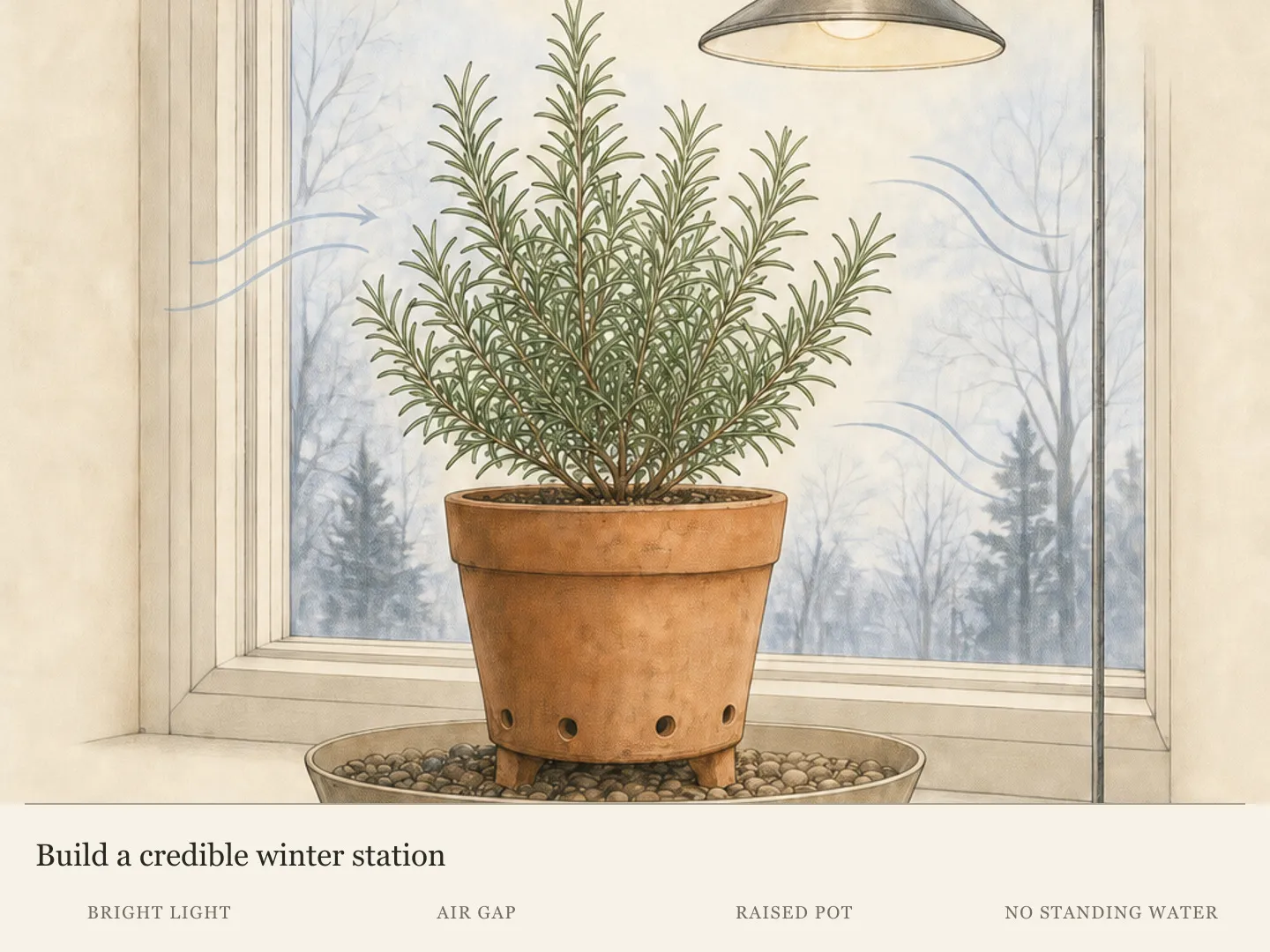
Keep tender plants bright, cool and ventilated, separate foliage from cold glass, water by root-zone condition and inspect undersides and stem joints for indoor pests.
Safety and garden spread
Common problems
Wet-root decline
- Look for
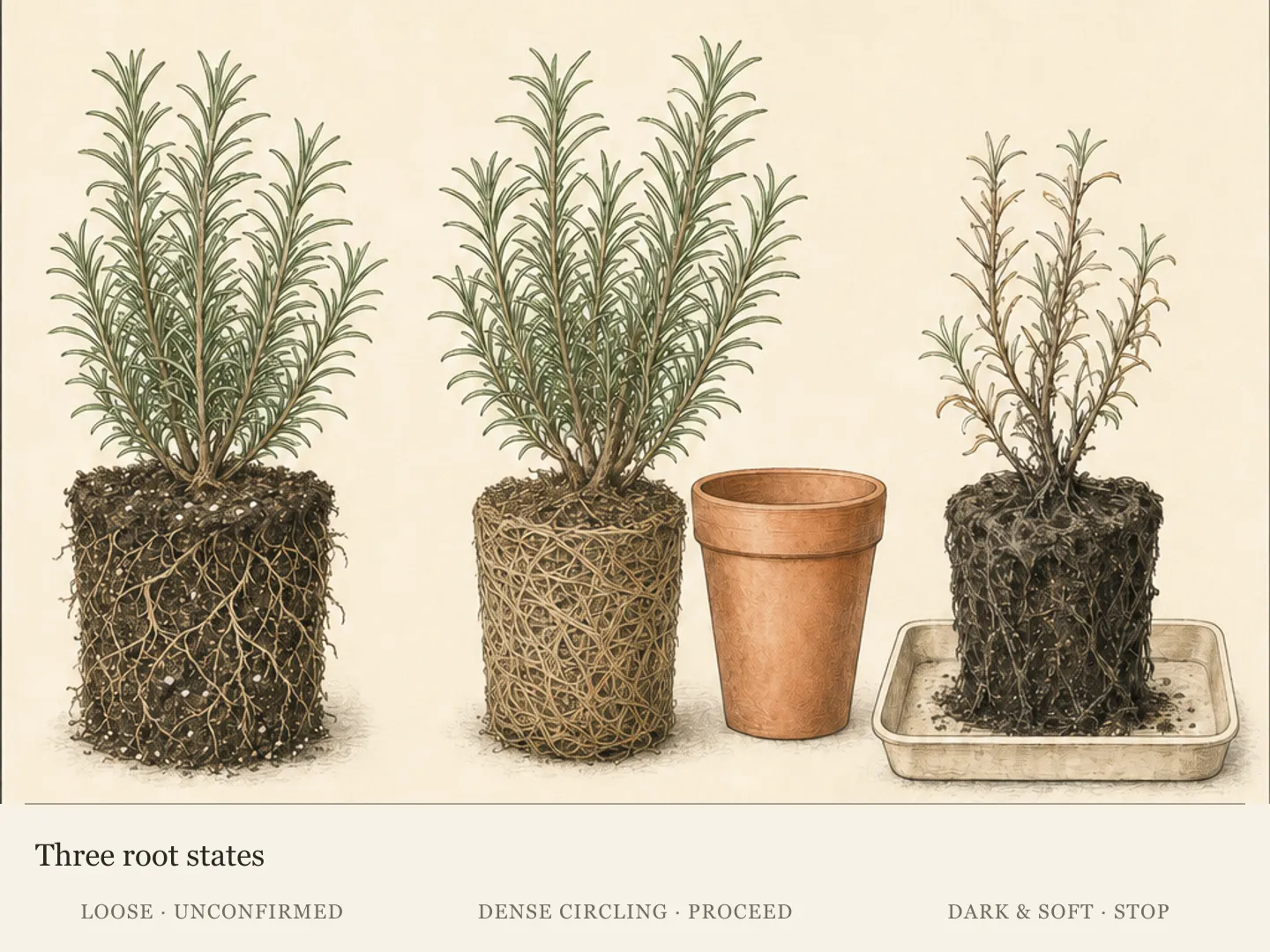
- Brown tips or whole shoots above mix that remains wet, with dark soft roots or crown tissue in advanced cases.
- Action
- Stop schedule-based watering, restore free drainage and airflow, inspect roots and replace severely rotted plants only after correcting the site.
Dry root ball
- Look for
- A markedly light pot, dry mix at depth and water racing through a gap between shrunken mix and the container wall.
- Action
- Re-wet slowly in repeated passes, verify moisture inside the root ball and resume checks based on weight and depth rather than surface color.
Powdery mildew
- Look for
- White powdery growth developing in crowded foliage, especially where indoor air is humid and still.
- Action
- Increase light, spacing and gentle air movement, keep foliage from cold glass and obtain local guidance if growth continues to spread.
Indoor mites or sap-feeders
- Look for
- Fine stippling, webbing, sticky residue or insects clustered on leaf undersides and stem joints.
- Action
- Isolate the plant, identify the pest before treatment and use an indoor-labeled method that is appropriate for an edible herb.
Winter dieback
- Look for
- Brittle exposed stems after cold weather while lower or sheltered shoots retain green tissue.
- Action
- Wait for growth to show the living boundary, remove dead wood to a live junction and revise cultivar choice, drainage or winter protection.
Related reading
Sources
- Salvia rosmarinus. North Carolina Extension Gardener Plant Toolbox. Source record · Accessed 2026-08-16.
- Salvia rosmarinus. Missouri Botanical Garden. Source record · Accessed 2026-08-16.
- Salvia rosmarinus Spenn.. Royal Botanic Gardens, Kew. Source record · Accessed 2026-08-30.
- Salvia rosmarinus (Ro). Royal Horticultural Society. Source record · Accessed 2026-08-30.
- Growing Vegetables in Containers and Salad Tables. University of Maryland Extension. Source record · Accessed 2026-08-16.